
Frankenstein
By Mary Shelley

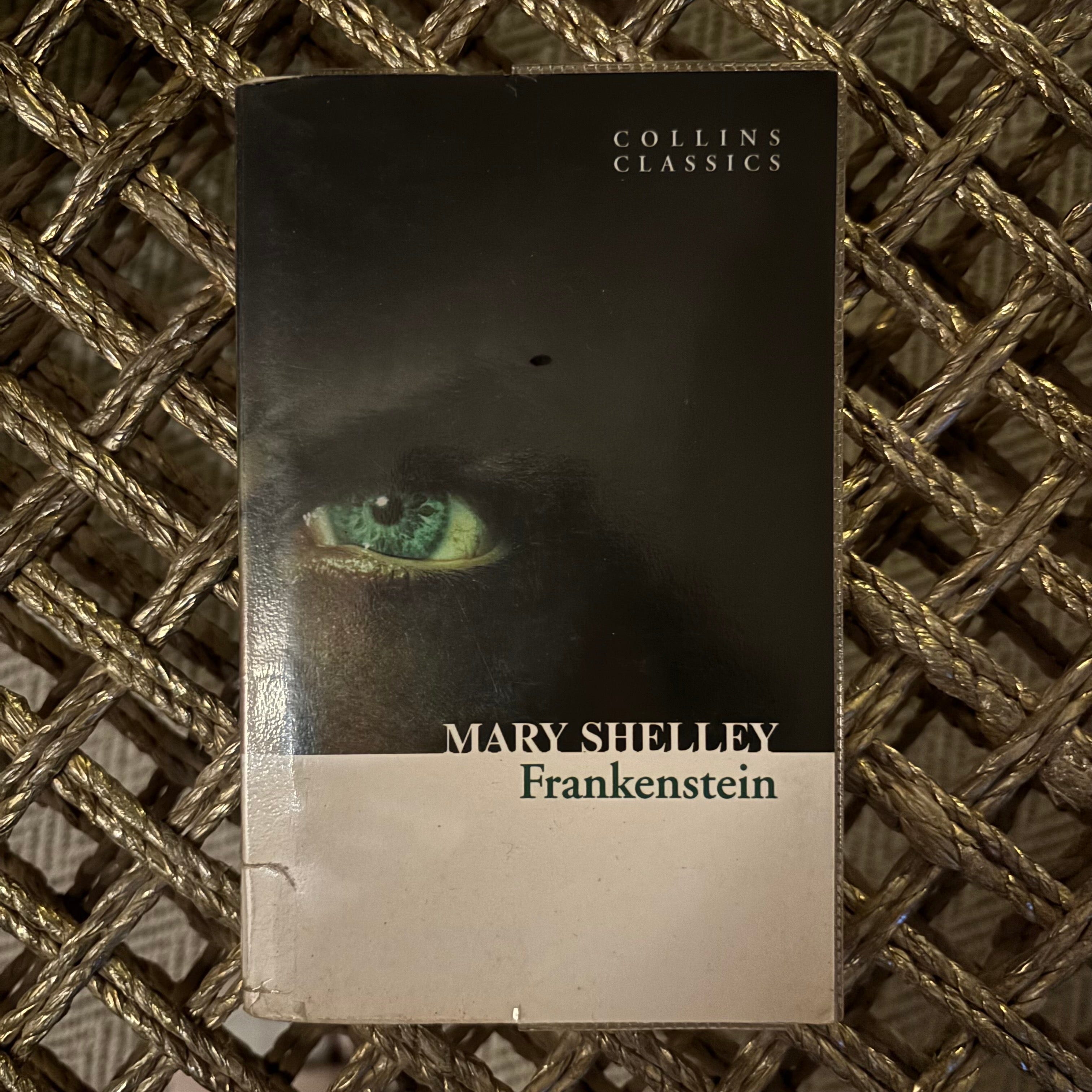
Happy New Year everyone! I can’t tell you how excited I am to start a new year of Booked with a story as brilliant and enrapturing as Frankenstein. Frankenstein is a story I’ve found to be a familiar name, but immensely warped by pop-culture (something I realised only after reading it), so I’ll break down some of the misconceptions first:
Frankenstein is the name of a scientist, who, in his academic engagements, learns how to grant life to an inanimate object. He uses his thrilling powers to create and bring to life a creature – human in its form but of a gigantic stature and horribly deformed. This ‘monster’, (often mistaken to be Frankenstein), is instantly rejected by Frankenstein, his creator, when the latter realises what a hideous being he has built. The book then unravels into a cat-and-mouse tale where creator and created hunt each other, each seeking revenge on the other.
Appearances can be Deceiving
What I found tragic about the entire story is that the creature, who is assumed to be a monster, is not a bad person. His only shortcoming is his physical deformity, which was unfairly assumed to host an equally vile personality by everyone who encountered him. After being born, the creature met several humans who detested and harmed him, because they thought he was evil and would hurt them. By secretly living in a hovel next to a cottage that hosted a kind, peasant family, the creature picked up language (how to speak, read, and write) and undertook small tasks to help out those people (under the cover of darkness). However, when he finally built up the courage to face them, and with his words implored them to become friends with him, they were appalled by his appearance and beat him up. Several such interactions take place through this sorry tale – the creature would help people, but would only receive harm in return. The creature therefore ended up hating his creator for making him, miserable and wretched and forced to be alone in this world.
This tale is a prime example of how deceiving appearances can be. Had someone been blindfolded and encountered the creature, they would have probably been best friends, loving and cherishing each other. When the creature approaches a blind man seeking friendship, the man is instantly warm towards him, until his other, sighted family members see the monstrosity kneeling in front of him and shoo him away. No matter how kind the creature behaved, or eloquently and passionately he spoke, his appearance was the first, and sometimes only, thing that people cared about.
Frankenstein is the Monster
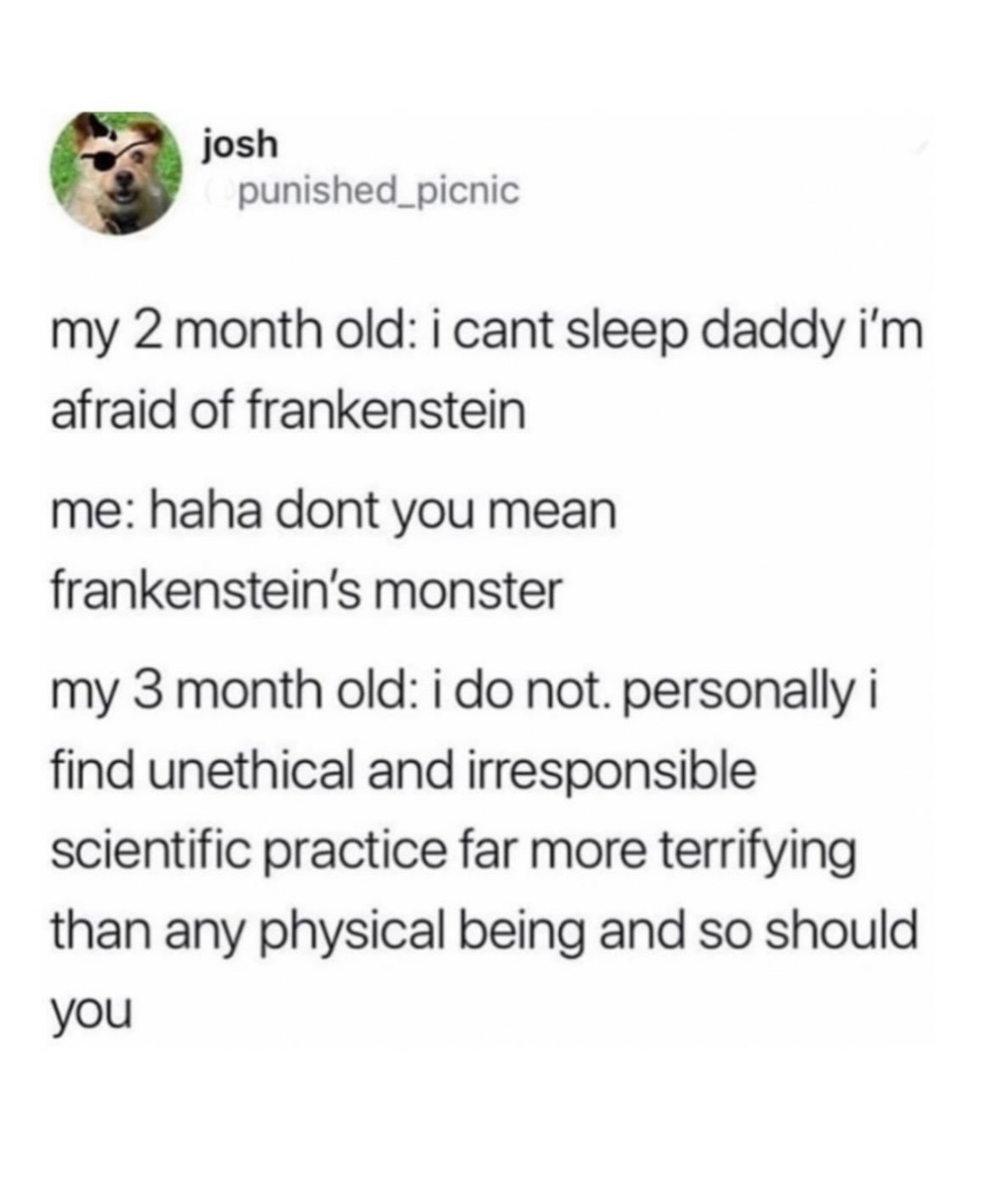
I don’t mean that Frankenstein is the monster in the literal sense, as I’ve just established above that he was the guy that created the monster. However, according to me, Frankenstein was the monster in this story, whereas the creature was just a poor soul who was been wronged throughout his life. Frankenstein eagerly created this being, over the course of many months, fully aware of what he was doing. However, when the creature actually came to life, he suddenly realised how ugly it looked and fled from it, leaving it to its fate in a harsh world. This is the equivalent of a mother abandoning her baby, because the baby looks ugly. All the creature sought was sympathy, companionship, and genuine love, but was disappointed everywhere he turned, most of all by his own creator. Later on in the book, Frankenstein has an opportunity to redeem himself – the creature gives him a chance to stop this endless cycle of revenge, but Frankenstein refuses. The creature then retaliates by committing murder (which he forewarned Frankenstein about), and is considered vile and wretched, for following through on his word. Frankenstein, however, is the cause of the creature’s existence and misery and, according to me, the actual villain in this tale.
I found a great meme that conveys this:
The Consequences of your Actions
This tale serves as a larger reflection on the consequences of one’s actions. Who is truly accountable for the people the creature kills? Is it Frankenstein, for creating the creature and making him so miserable that he was pushed to doing this? Or the creature, because it was his hand that finally committed the act? And how can we attribute consequence and accountability – Frankenstein was around 18-20 years old when he built the creature. Can he be truly and completely faulted for what he did, given that he couldn’t grasp the full consequences of his actions and didn’t even have a fully formed pre-frontal cortex?
I used to think that everyone is 100% responsible for the consequences of their actions, and they deserve whatever the outcome of that may be. Now, I’m not so sure. At the end of the day, people make mistakes. They can be foolish, impulsive, and emotional, swayed by the smallest of things, and at times bereft of all rationality. When you’re young (pre-25 or pre-18) this becomes even more grey. Who is to decide how much someone should be held responsible for certain outcomes and how to attribute blame? While I blame Frankenstein in this particular tale, might there be an alternative argument that he didn’t know what he was doing, so it’s not truly his fault?
Take-aways
The tale of Frankenstein is a wonderful and extremely insightful commentary on cruelty, forgiveness, and the consequences of one’s action. It weaves together a compelling and engaging storyline, with ample opportunity for reflection on life and our relationships with those around us. I find it incredible that Mary Shelley was only 19 (YES, 19!) when she wrote this, and am astounded by the wisdom and clarity through which the tale is explored. While it’s not an easy read, I would strongly recommend it as a timeless masterpiece that truly deserves its title as one of the finest gothic horror stories of all time.
Rating: 9/10
While we debate on whether Frankenstein should have been aware of / responsible for his actions at the tender age of 20, how can we disregard how even more mature people reacted to the creature simply based on his looks?
A very engaging review Ishita. It's not surprising that the writer was a teenager herself when she wrote it. Looking at the world through filters of Idealism, introspection, morality and hypocrisy is the forte of young adults. :)